PROJECT /01
Mafia Simulator
A KWINTET GAMES PROJECT
ACTIVE DEVELOPMENT
- ROLE
- Game Developer / Game Designer / Project Lead
- ENGINE
- Unity
- FORMAT
- 3D Crime Simulation
- LANGUAGE
- C#
OVERVIEW
The Project
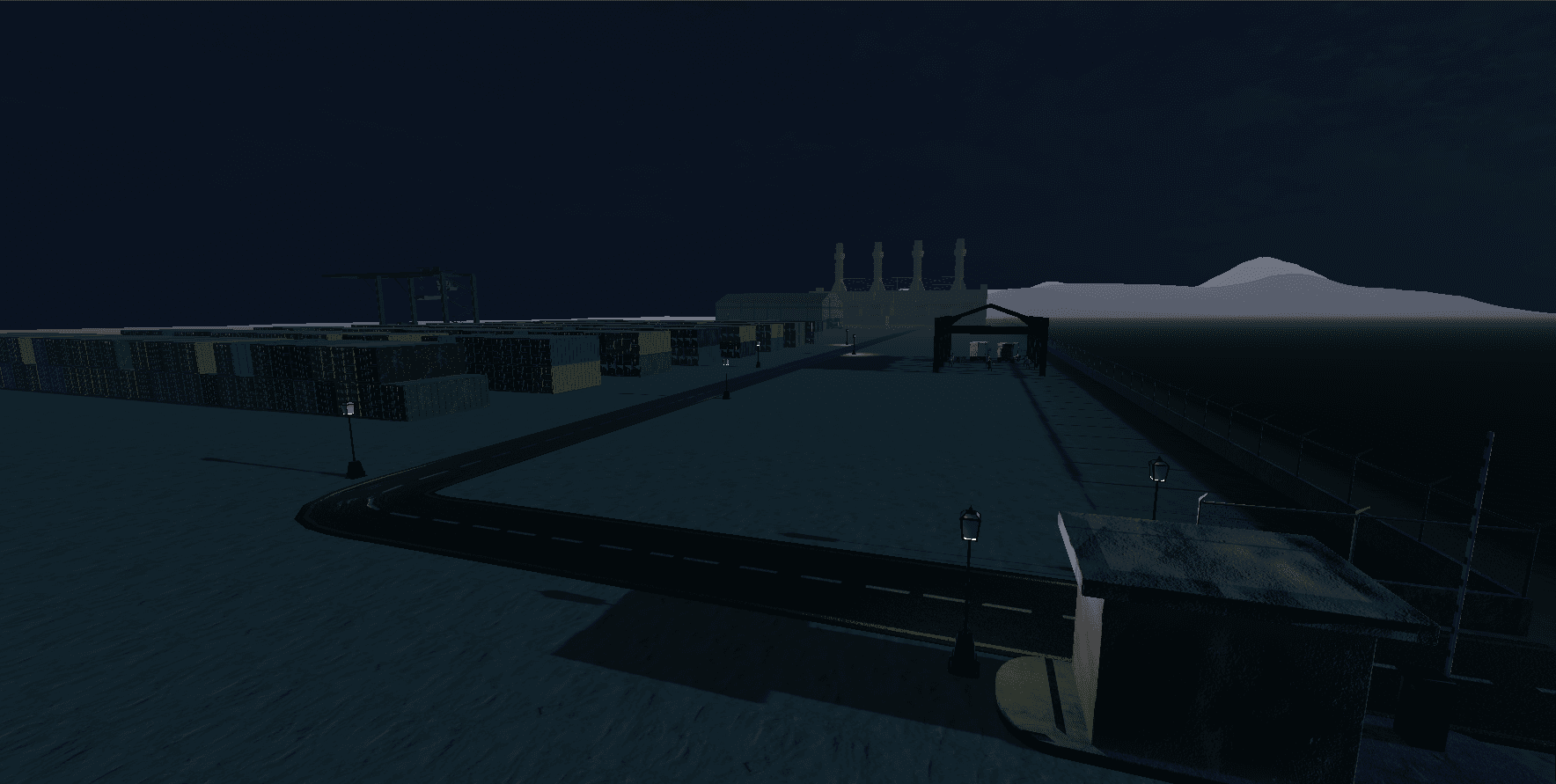
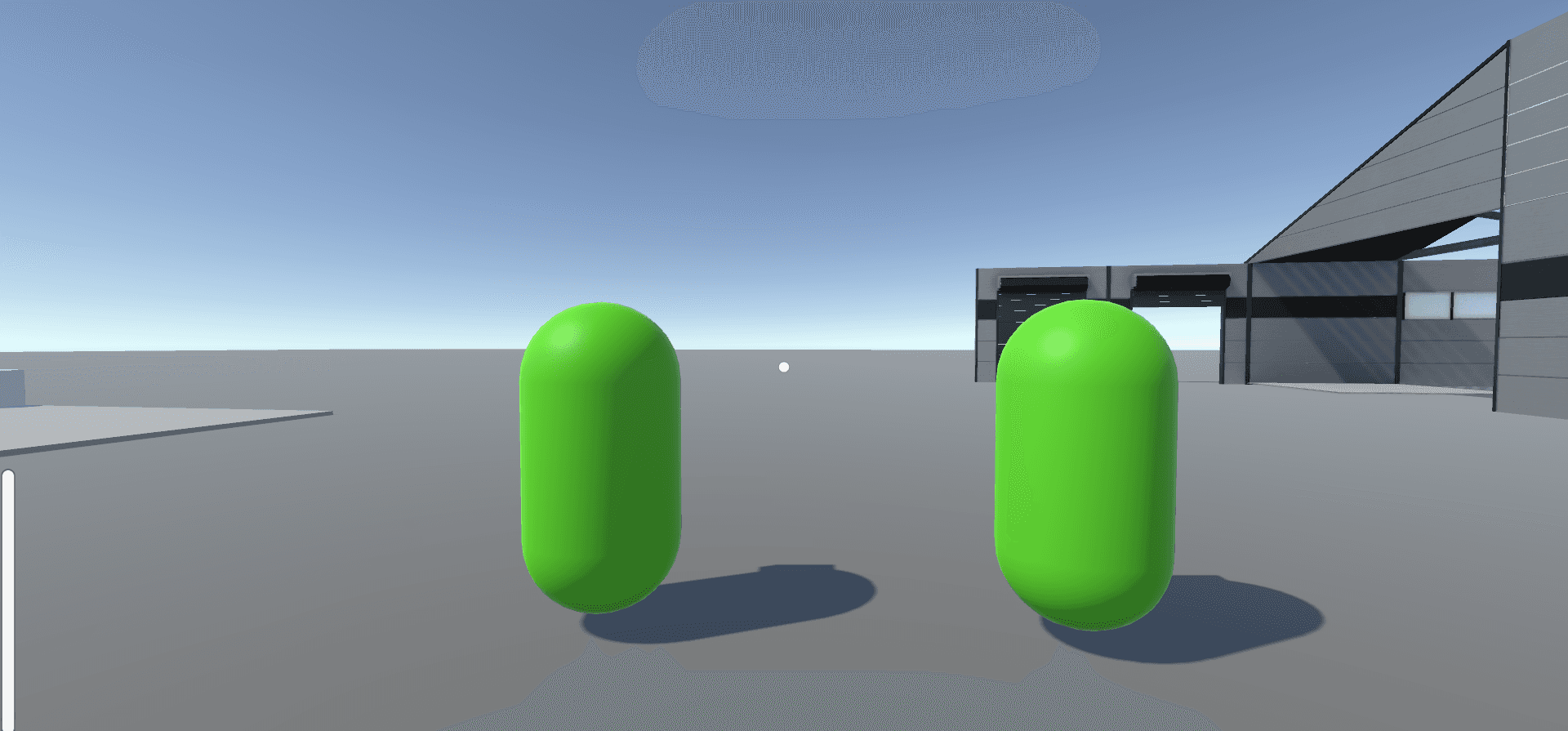
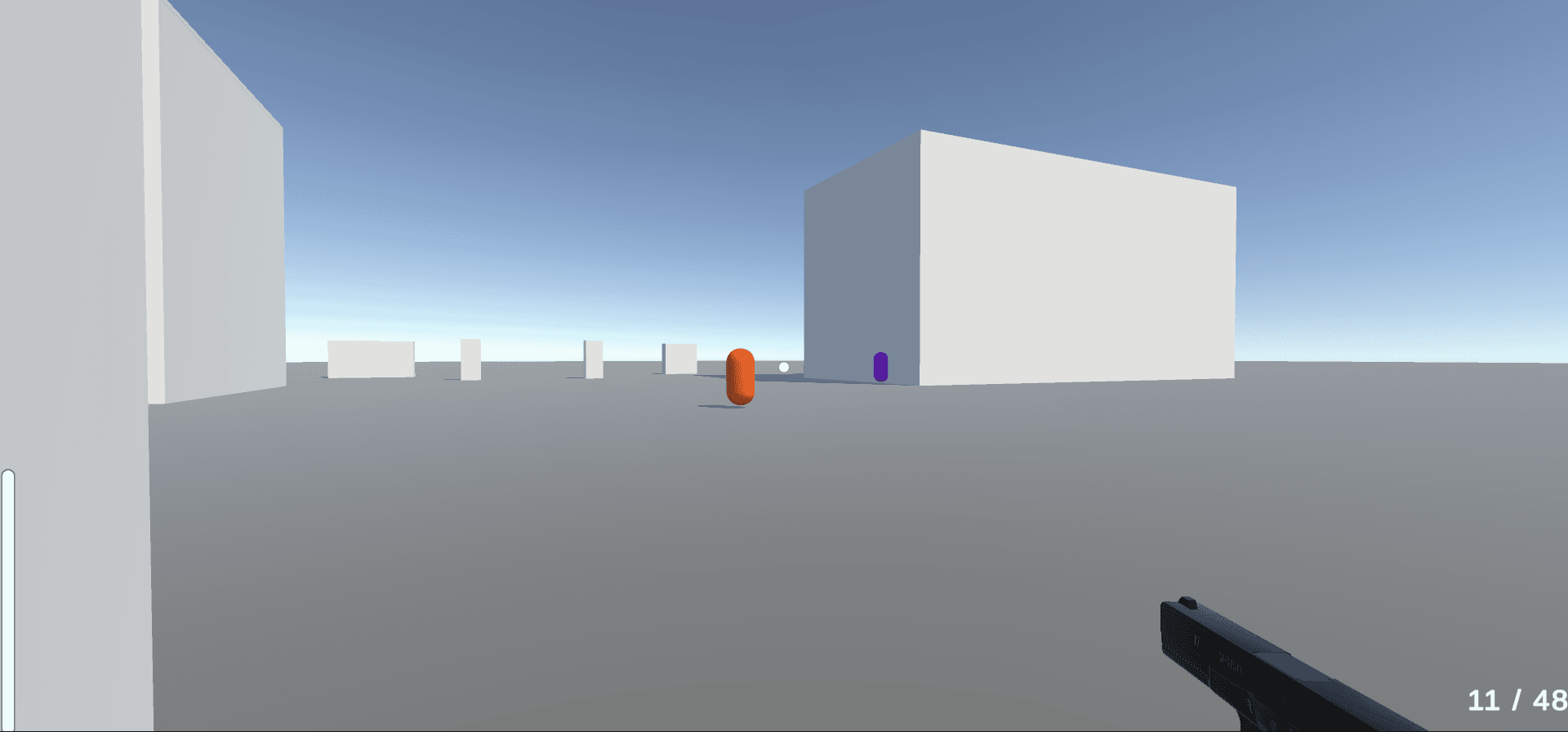
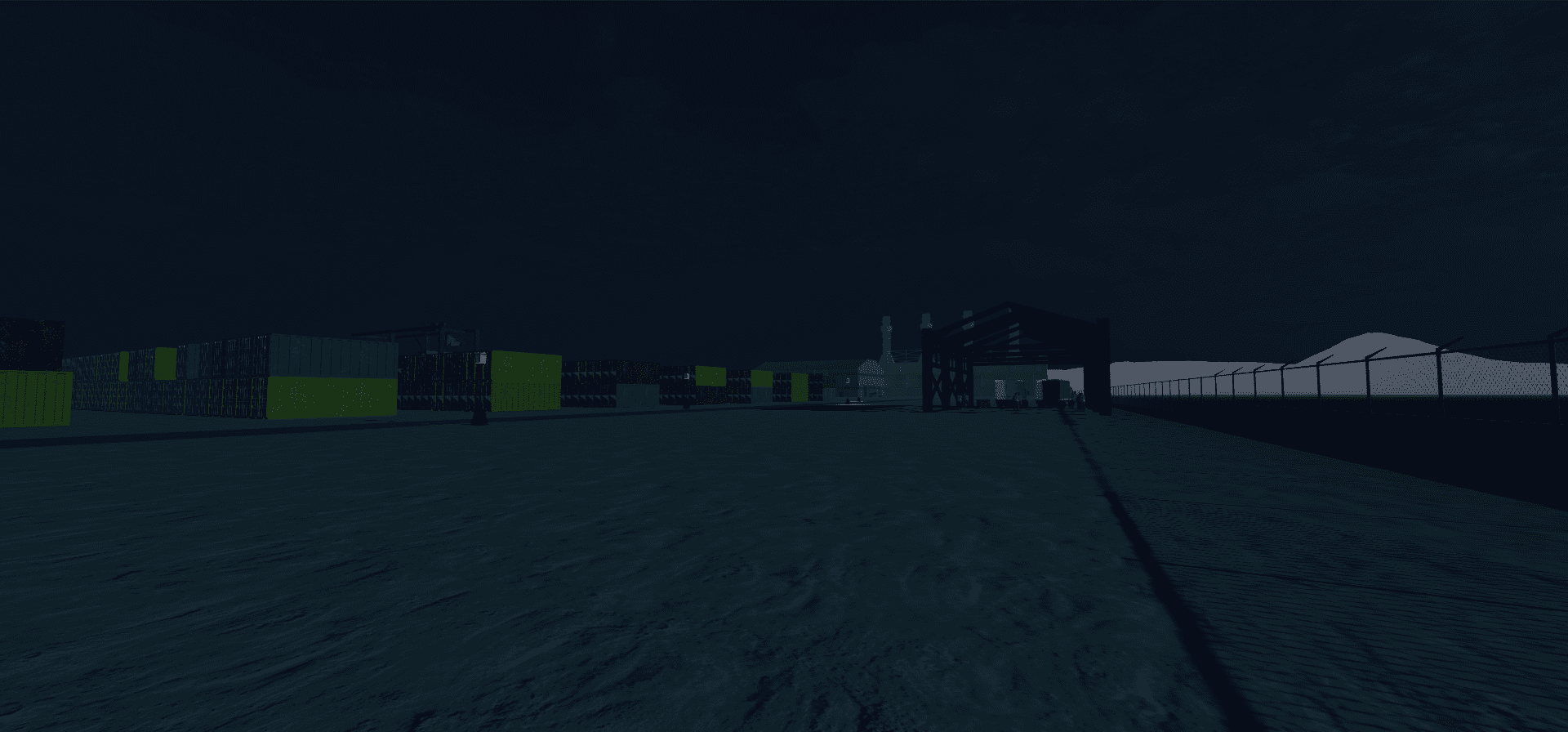
Development spans two connected contexts: an earlier mechanics-focused Unity project used to validate gameplay behavior with temporary visuals, and a newer build where those systems and project content are being brought together within a more developed port environment. Ahmet's work covers gameplay-system implementation, character mechanics, AI behavior, planning, iteration, demo delivery, and coordination.
SYSTEM HIGHLIGHTS
Core Systems
A selection of core gameplay systems highlighted through media and code.
TECHNICAL PRESENTATION
Gameplay + Code
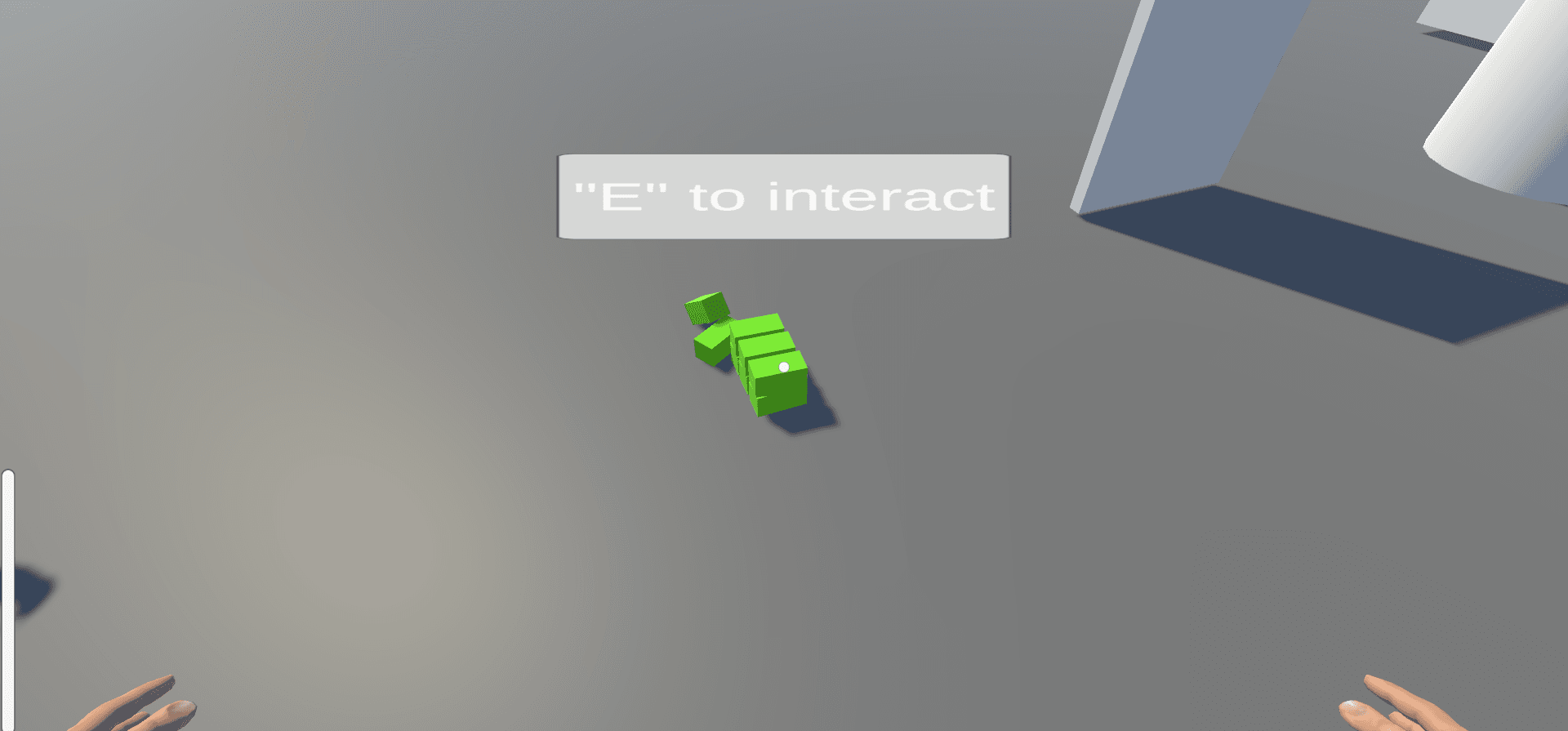
A forward camera ray tests only the configured interaction layer, verifies the common interaction contract, and maintains the current target and prompt state.
Interaction System
A shared player interaction flow supports multiple object types such as doors and pickups.
- CONTRIBUTION
- Implemented and iterated on reusable player interaction behavior, including target detection and object-specific execution.
void DetectInteractable(){ RaycastHit hit; if (Physics.Raycast(Camera.main.transform.position, Camera.main.transform.forward, out hit, interactionRange, interactableLayer)) { IInteractable interactable = hit.collider.GetComponent<IInteractable>(); if (interactable != null) { if (currentInteractableObject != hit.collider.gameObject) { currentInteractableObject = hit.collider.gameObject; interactionUI.SetActive(true); } return; } } currentInteractableObject = null; interactionUI.SetActive(false);}ARCHITECTURE
System Map
Gameplay input, command, takedown, and civilian-response flows
A conceptual map of the verified systems shown in the case study. It groups runtime responsibilities without presenting the diagram as a literal class hierarchy.
- Player Input
- Flows to: Interaction
- Interaction
- Flows to: Interactable Object
- Interactable Object
- Takedown Request
- Flows to: Attacker / Victim Sync
- Attacker / Victim Sync
- Flows to: Execution
- Execution
- Crew Command Panel
- Flows to: Selected Crew
- Selected Crew
- Flows to: Command Dispatch
- Command Dispatch
- Flows to: Orders / Formation
- Orders / Formation
- Proximity / Weapon / Gunshot
- Flows to: Threat Evaluation
- Threat Evaluation
- Flows to: Escape State
- Escape State
- Flows to: Distance / Break LOS
- Distance / Break LOS
SCOPE
Responsibilities
GAMEPLAY SYSTEMS
- Implemented and iterated on reusable player interaction and character-control mechanics.
- Developed target detection and object-specific interaction execution for doors and pickups.
TAKEDOWN
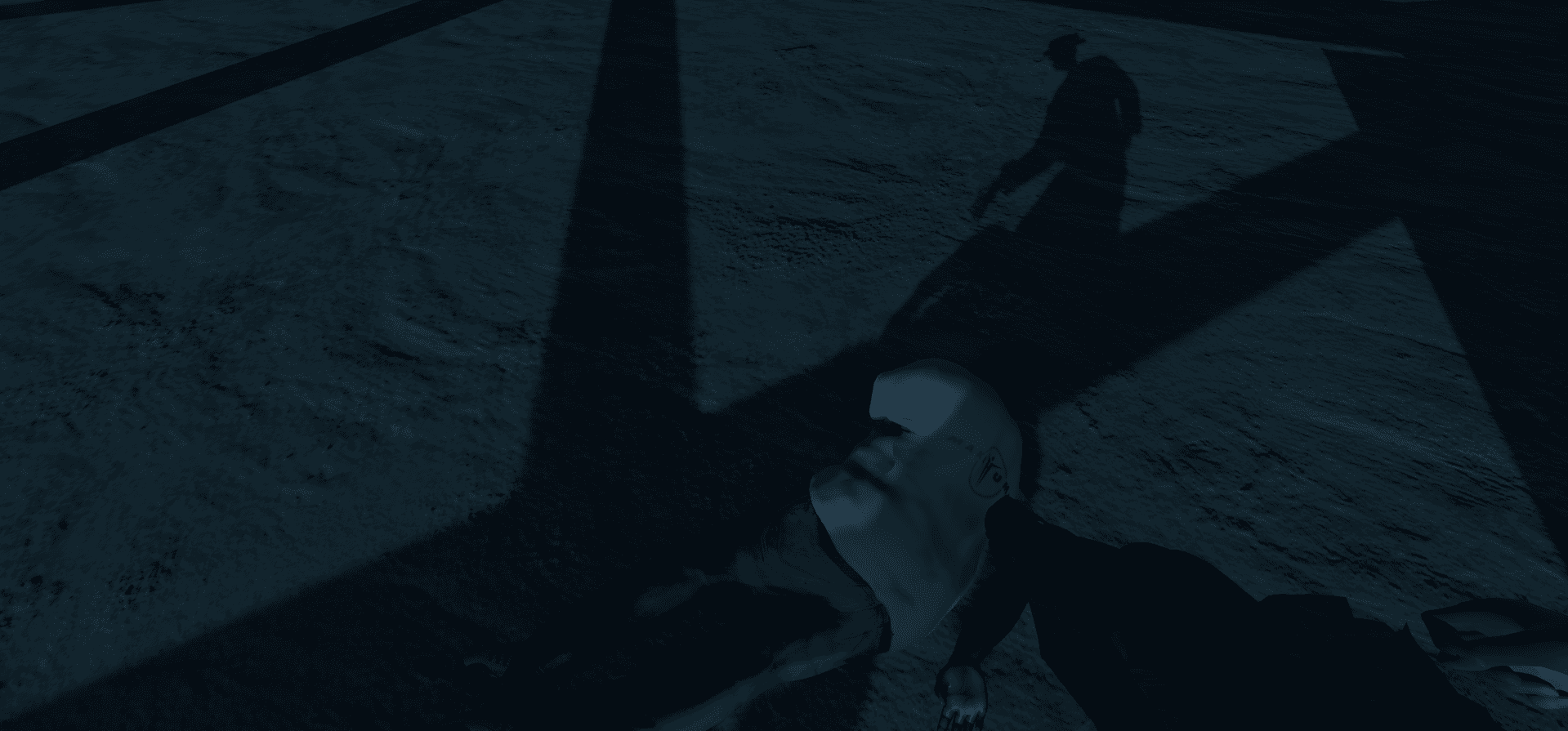
- Developed attacker and victim synchronization for shared takedown execution.
- Iterated on paired-character state and animation alignment during development.
CREW CONTROL
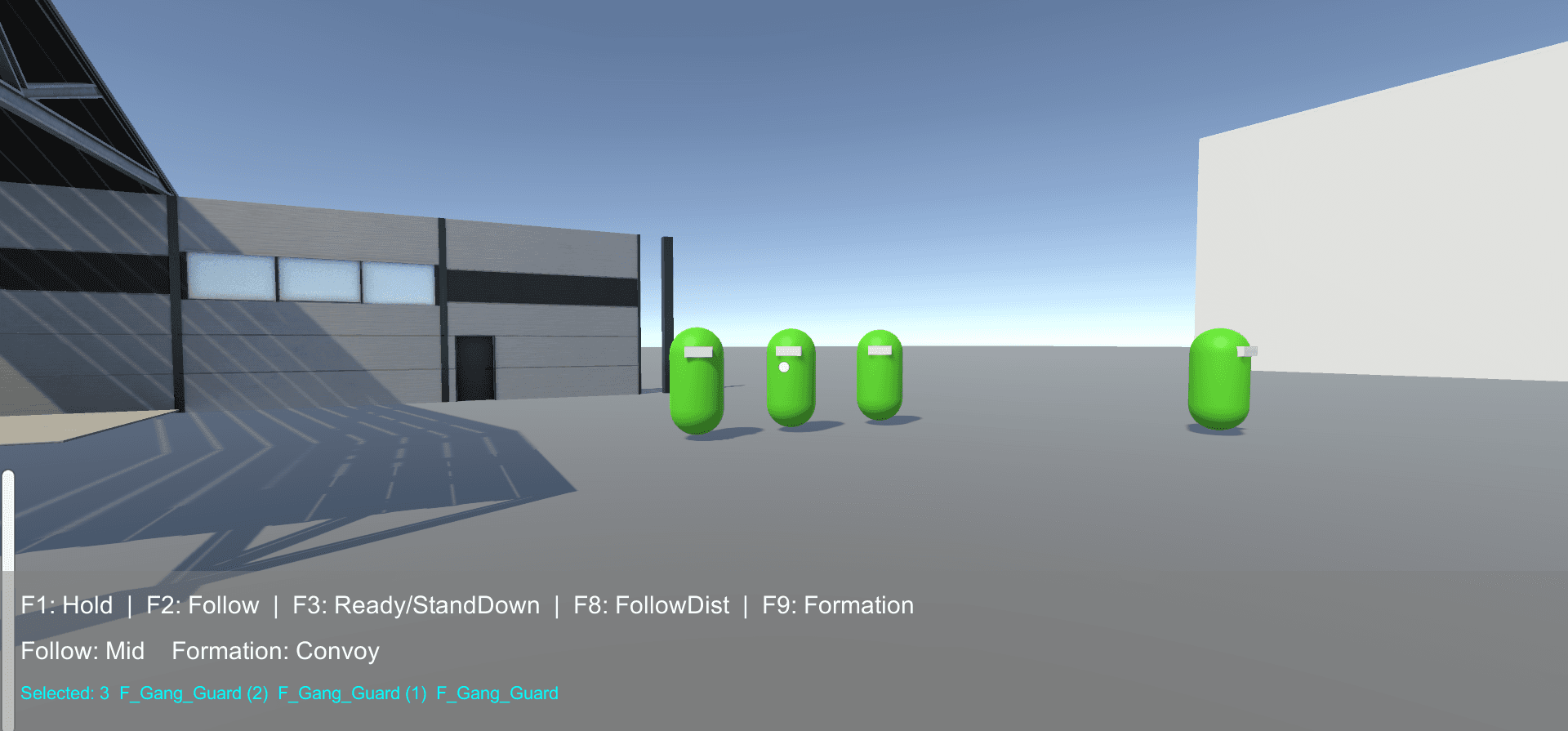
- Built persistent crew selection and contextual command dispatch.
- Implemented follow distance, readiness, and formation-control options.
CIVILIAN AI
- Developed threat-driven escape behavior reacting to proximity, visible weapons, and gunfire.
- Implemented escape targeting that seeks distance and attempts to break line of sight.
SYSTEM INTEGRATION
- Continued progressing prototype-tested mechanics within the newer project build.
- Supported planning, iteration, demo delivery, task assignment, and team coordination.
DEVELOPMENT NOTES
Development Process
- 01
MECHANICS PROTOTYPING
Core gameplay systems were first developed in a mechanics-focused Unity project using placeholder geometry and temporary characters where necessary.
- 02
SYSTEM VALIDATION
Interaction, takedown, crew-control, and civilian-behavior mechanics were iterated independently from final visual presentation.
- 03
CURRENT BUILD
Development later moved into a newer project context where validated mechanics and content are being brought into a more developed environment and character presentation.
- 04
ITERATION
As development continues, prototype media and temporary visual placeholders can be replaced with footage from newer builds without changing the case-study structure.
SELECTED MEDIA
Gallery